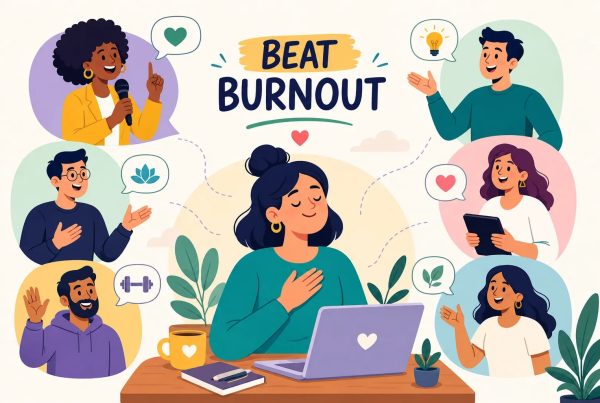
Hustle culture vs. work-life balance for business owners is a live debate, and most founders are making the wrong trade-offs. Hustle culture is not inherently wrong. Making it a permanent operating model is both a strategic mistake and a biological one. The always-on mentality built real companies and real wealth, and it also put real founders in hospital beds. Roughly one-third to one-half of entrepreneurs report burnout or burnout-level exhaustion in recent surveys. That is not a rounding error; that is a structural failure hiding inside a cultural identity.
The honest tension here is that intensity works. Early-stage businesses often survive on sheer founder output, and the grit to outwork competitors during chaos is a genuine edge. The problem is when the sprint becomes the strategy. Christopher W. Brown built three companies, competed in triathlons, and wore intensity like armor until a heart attack forced him to reconsider everything he had accepted as normal. His recovery became the foundation for Permission to Unplug, and his story is not exceptional. It is a pattern. This article gives you the trade-offs, the breaking points most founders miss, and the specific moves that protect your time without slowing your growth.
Key takeaways
- Hustle has a ceiling: Research finds marginal productivity tends to decline in the roughly 40–55 hour range (estimates vary by study and task); beyond that threshold, additional hours typically produce little measurable output.
- Burnout is not rare: 84.4% of surveyed U.S. small business owners say their personal or mental health has suffered, according to a 2026 survey of 1,000 owners reported by SF Weekly.
- The boundary gap is enormous: Among founders who maintained clear work-life boundaries, 45% reported low burnout; among those who couldn’t, only 6% did.
- Reduced hours can preserve revenue: A 2022–23 U.S. and Canadian reduced-hours trial reported a 15% average revenue increase, a 57% drop in turnover, and a 65% drop in absenteeism.
- Systems, not willpower: Protecting your time requires operational infrastructure, documented processes, decision rights, async workflows, and outcome dashboards, not simply better discipline.
- Know your stage: The Grinder, The Vacationer, The Unplugger, and The Experiencer each need different moves to progress toward genuine freedom.
Why hustle culture became the founder’s default setting
Hustle culture earned its reputation the honest way: it produced results. During early-stage chaos, a launch, a funding round, or a survival phase where output was the only currency that mattered, intensity was a rational response. Founders who pushed through the first three years on sheer will often did so because that was what the moment required. That context is worth honoring before challenging the broader narrative.
The problem is not the sprint. The problem is what happened after the sprint: American entrepreneurial culture turned the emergency operating mode into a permanent identity. Many observers point to investor expectations, peer group norms, and the social-media performance of the visible grind as key drivers of that shift, though the mechanisms behind each are complex. Sustainable entrepreneurship started to feel like an admission of weakness rather than a strategic decision. When overwork becomes a badge of honor, the feedback loops that should slow a founder down get muted instead.
How widespread is founder burnout in 2026?
The numbers from this year make the scale concrete. A 2026 survey of 1,000 U.S. small business owners, reported in SF Weekly’s coverage of small-business owner burnout, found that 84.4% said their personal or mental health had suffered, 53.5% lost sleep over their business several times a week, and 29% reported serious or lasting damage to a close relationship. A separate Fortune survey reported that 87% of founders experienced anxiety, depression, burnout, or some combination. Among those who maintained clear work-life boundaries, 45% reported low burnout. Among those who could not, only 6% did. That gap is the real story.
Those statistics describe a population, but the symptoms show up personally. Emotional exhaustion that arrives on Sunday nights before the week even starts. Decision quality that drops noticeably by mid-afternoon. Irritability that spills into the people the founder is supposedly building this business for. The inability to fully detach during a family dinner, a vacation, or even a single evening. Sleep disruption that compounds week over week. These are not signs of dedication. They are early-warning signals that most hustle-culture approaches were never designed to recognize.
Hustle culture vs. work-life balance for business owners: where the always-on model breaks down
The research is consistent on the productivity question: output per hour declines in the roughly 40–55 hour range, and estimates vary by study, task type, and industry. Beyond that band, additional hours tend to produce negligible extra output. For business owners, this means every hour worked past that threshold tends to generate slower decisions, more errors, weaker customer service, and declining creative output. Fatigue does not just reduce capacity; it creates new problems that then demand more hours to fix.
What fills that space is what researchers now call “fauxductivity”: visible busyness that replaces actual strategic work. You’re active, you’re responding, you’re in meetings, but the high-leverage moves that actually grow the business keep getting deferred. Chronic stress and sleep deprivation compound this by impairing working memory, narrowing problem framing, and making it harder to recognize that your judgment is degrading. The cognitive signature of an overworked founder rarely looks like obvious incapacity. It looks like inconsistent decisions, excessive certainty, and strategic rigidity.
This is where Christopher W. Brown’s story becomes more than a cautionary anecdote. He had the fitness of a triathlete and the drive of someone who had built multiple companies from the ground up. None of that gave him a warning signal he was conditioned to respect. His heart attack forced a complete re-evaluation of what sustainable leadership actually requires, and that reckoning became the model inside Permission to Unplug.
What does it actually look like to choose balance without losing ground?
The goal is not to stop working hard. The goal is to stop treating a crisis-level operating mode as a normal business week. Deliberate sprints during launches, pivots, or high-stakes moments are sustainable. Open-ended always-on availability is not. A practical decision filter for founders: ask yourself whether you are responding to a genuine emergency or whether you have designed a business that makes everything feel like one. That question alone can surface the structural issue underneath the behavioral pattern.
Christopher W. Brown’s approach describes four stages that most founders move through on the path to operational freedom. The Grinder is fully dependent on personal presence to keep the business running. The Vacationer is physically away but mentally never gone, checking messages at dinner and half-present at every milestone. The Unplugger has systems in place but has not yet reached full freedom. The Experiencer has true operational independence. Many founders who feel burned out will recognize features of the Grinder or Vacationer archetypes. The entrepreneur quiz on Christopher’s platform is a quick self-assessment to help identify which stage applies to you right now.
Hustle culture vs. work-life balance for business owners: practical moves to protect your time
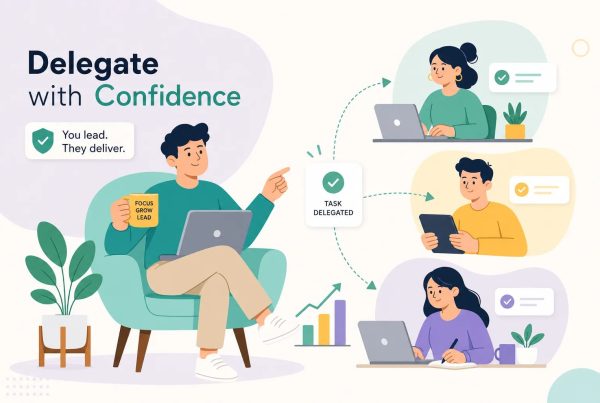
The starting point is a two-week time audit: tracking every activity in 30-minute blocks and then sorting each task into one of four categories, eliminate, automate, delegate, or own. A well-functioning founder should be spending roughly 15–20% of their time on decisions that genuinely require their judgment. Everything else is a candidate for transfer. The SOP sequence that makes delegation stick follows a clear path: document the outcome and the steps, demonstrate the process once, observe two supervised runs, then review results weekly for the first month before stepping back to monthly check-ins.
Delegation only holds when authority is clear. Each transferred process needs a defined outcome, a decision threshold, and a measurement. A team member responsible for inbound lead response, for example, needs to know the response time standard and the discount authority they carry. They also need a clear escalation trigger and the metric used to evaluate performance. Delegation without decision rights is just supervision with extra steps.
Structural policies make time protection compound over time. Async-first communication by default, defined core collaboration hours, protected owner blocks for strategy and key relationships, and written decision rights with explicit escalation thresholds are not lifestyle preferences. They are operating infrastructure. The evidence from reduced-hours trials supports the investment: a 2022–23 U.S. and Canadian trial, summarized by the 4 Day Week Foundation, reported a 15% average revenue increase, a 65% drop in absenteeism, and a 57% reduction in turnover. Awin’s four-day-week pilot saw regrettable turnover fall 33%. Revenue did not depend on the hours. It depended on focus, clear handoffs, and coverage. That is the core argument in Permission to Unplug: a business that requires your constant presence is not a business. It is a job with substantially more risk.
How do you know the shift is actually working?
Founders need to measure two things simultaneously: business outcomes and personal recovery. On the business side, track revenue or gross margin, lead response time, delivery error rate, client retention, and accounts receivable age. On the personal side, track owner hours worked per week, after-hours interruptions, the number of escalations that required direct involvement, and days fully away from the business without a crisis. If personal hours fall while business metrics hold, the shift is working.
The 30-day implementation follows a week-by-week sequence. Audit time in week one. Eliminate low-value work and select five tasks for transfer in week two. Document SOPs and assign decision authority in week three. Establish protected owner blocks and review against baseline metrics in week four. Frame this as a systems installation, not a mindset exercise. The mindset catches up once the structure is in place and the evidence arrives that the business didn’t collapse when you stepped back.
The design problem underneath the culture war
Hustle culture built real things and extracted a real cost. The data, the case studies, and Brown’s near-fatal cardiac event all point to the same conclusion: sustainable leadership is not the soft option. It is the strategic one. The founders who reach genuine operational freedom are not the ones who worked less. They are the ones who built more deliberately, with systems, teams, and boundaries that compounded over time.
If you recognized yourself in the symptoms, the stages, or the patterns described here, Permission to Unplug by Christopher W. Brown is the structured next step. It is not a book about working less. It is a structure for building a business that can run without you so that your presence becomes a choice rather than a requirement.
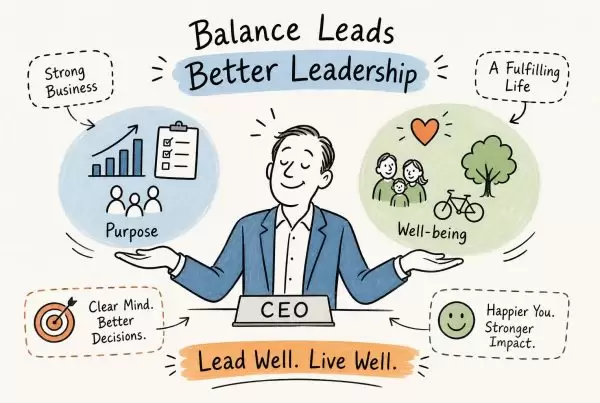
The tension in the hustle culture vs. work-life balance debate for business owners is not a permanent contradiction. It is a design problem, and design problems have solutions. The first step is knowing where you are starting from: take the entrepreneur quiz and find out whether you are a Grinder, a Vacationer, an Unplugger, or an Experiencer. The moves that matter most right now depend entirely on that answer.
Frequently Asked Questions
How do we run a two-week time audit to see where our hours go?
Run a two-week audit by tracking every activity in 30-minute blocks and then sort each task into eliminate, automate, delegate, or own. We recommend totaling the time in each category, looking for tasks that consume time but don’t require founder judgment, and using that data to pick candidates for transfer or elimination.
What is “fauxductivity” and how does it harm our business?
Fauxductivity is visible busyness that replaces actual strategic work. It means you’re active, responding, in meetings, and reacting, but the high-leverage moves that grow the business keep getting deferred, which creates more problems that then demand extra hours to fix.
At what point does extra work stop adding meaningful productivity for our team?
Productivity per hour tends to decline in the roughly 40–55 hour range. Beyond that band, additional hours typically produce negligible extra output and often lead to slower decisions, more errors, and declining creative output for the business.
What are the four founder stages and which one might describe our current situation?
The four stages are The Grinder, The Vacationer, The Unplugger, and The Experiencer. The Grinder depends on personal presence to run the business, The Vacationer is physically away but mentally always present, The Unplugger has systems but not full freedom, and The Experiencer has operational independence, identify which stage fits you to know the moves that matter next.
How should we run a time audit so it actually helps protect our time?
Do a two-week time audit tracking every activity in 30-minute blocks and then sort each task into eliminate, automate, delegate, or own. Aim to spend roughly 15–20% of your time on decisions that genuinely require your judgment and treat everything else as a candidate for transfer.