Most keynote speakers make a costly mistake when they step in front of a C-suite audience to talk about work-life balance: they treat the room like a wellness seminar. CEOs don’t need permission to care about their health. They need a business case, a framework, and proof that the approach works at their level. The gap between knowing your current pace is unsustainable and knowing exactly what to do about it is where a great work-life balance keynote for a CEO audience lives, and where most speakers fail to deliver.
The data confirms how urgent this gap has become. DDI’s 2025 Global Leadership Forecast found that 71% of leaders reported increased stress since taking their current roles, up from 63% in 2022. LHH reported leadership burnout rising from 52% in 2023 to 56% in 2024. A Gartner October 2024 survey of 200 C-suite executives found that 56% were likely or extremely likely to leave within two years. These aren’t wellness statistics; they are organizational risk indicators. A keynote that doesn’t address them in those terms will lose the room before the second slide.
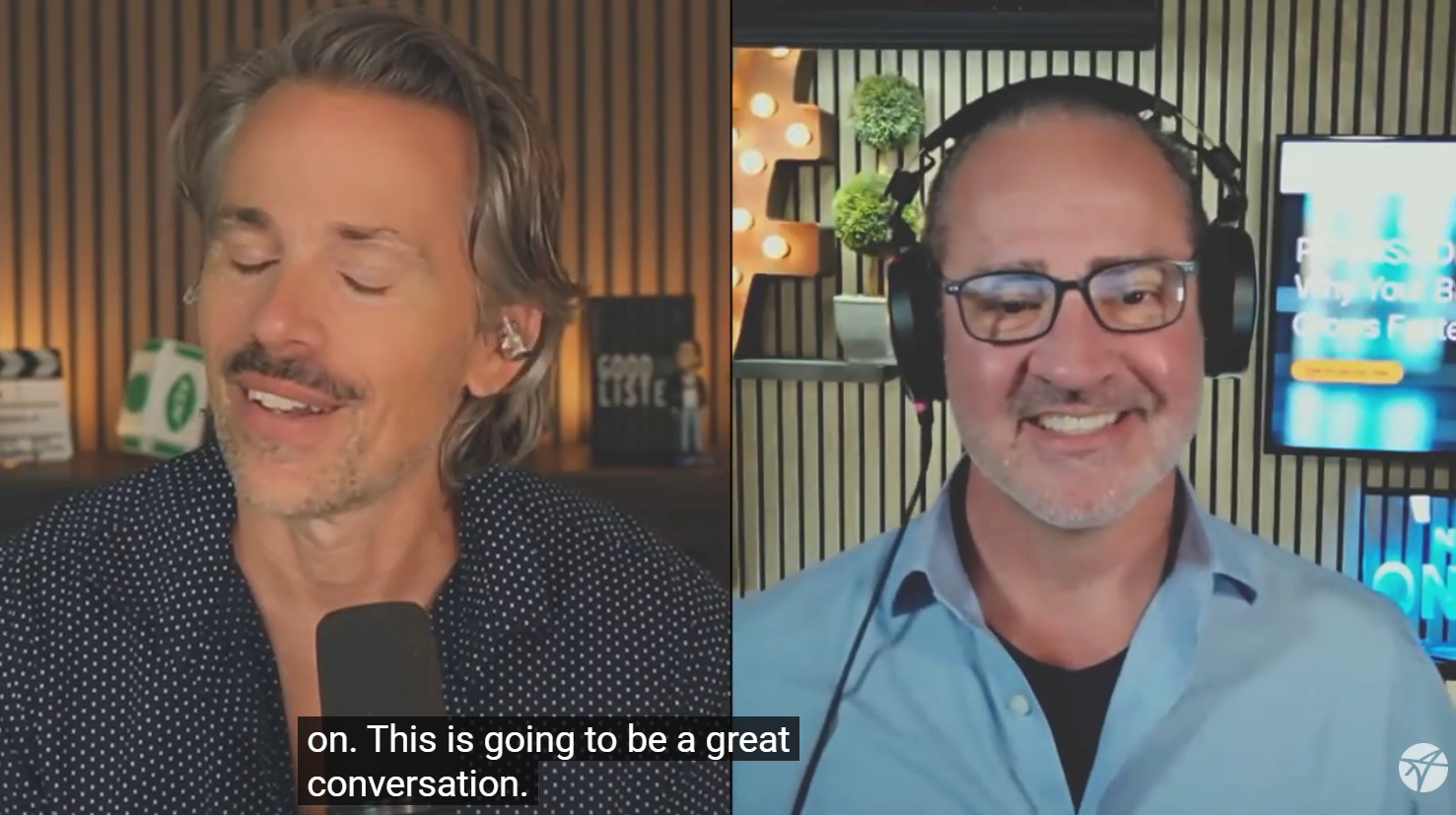
Christopher W. Brown, entrepreneur, author, and keynote speaker, built his framework around this problem. In his own account of surviving a heart attack, one he connects directly to the relentless pace of running three companies simultaneously, he rebuilt his philosophy and his businesses around a single premise: sustainable leadership is not a softer alternative to ambition. It is the operating condition that allows ambition to continue. What follows is a blueprint for the content, structure, and call-to-action that make a CEO well-being keynote genuinely change behavior in an executive room.
Why a C-suite audience is a completely different room
Understanding why executives respond differently to this topic isn’t optional context; it’s the design brief for the entire talk. CEOs carry a pressure profile that separates them from every other audience. They are accountable for performance, cash flow, culture, reputation, and legal exposure all at once, not in any manageable order. Conflicting stakeholder demands arrive constantly: boards want returns, employees want security, regulators want compliance, and customers want reliability. A Harvard Business School study of large-company CEOs found an average workweek of 62.5 hours, work on 79% of weekends, and work on 70% of vacation days. This is not overwork by accident. It is a structural problem baked into the role.
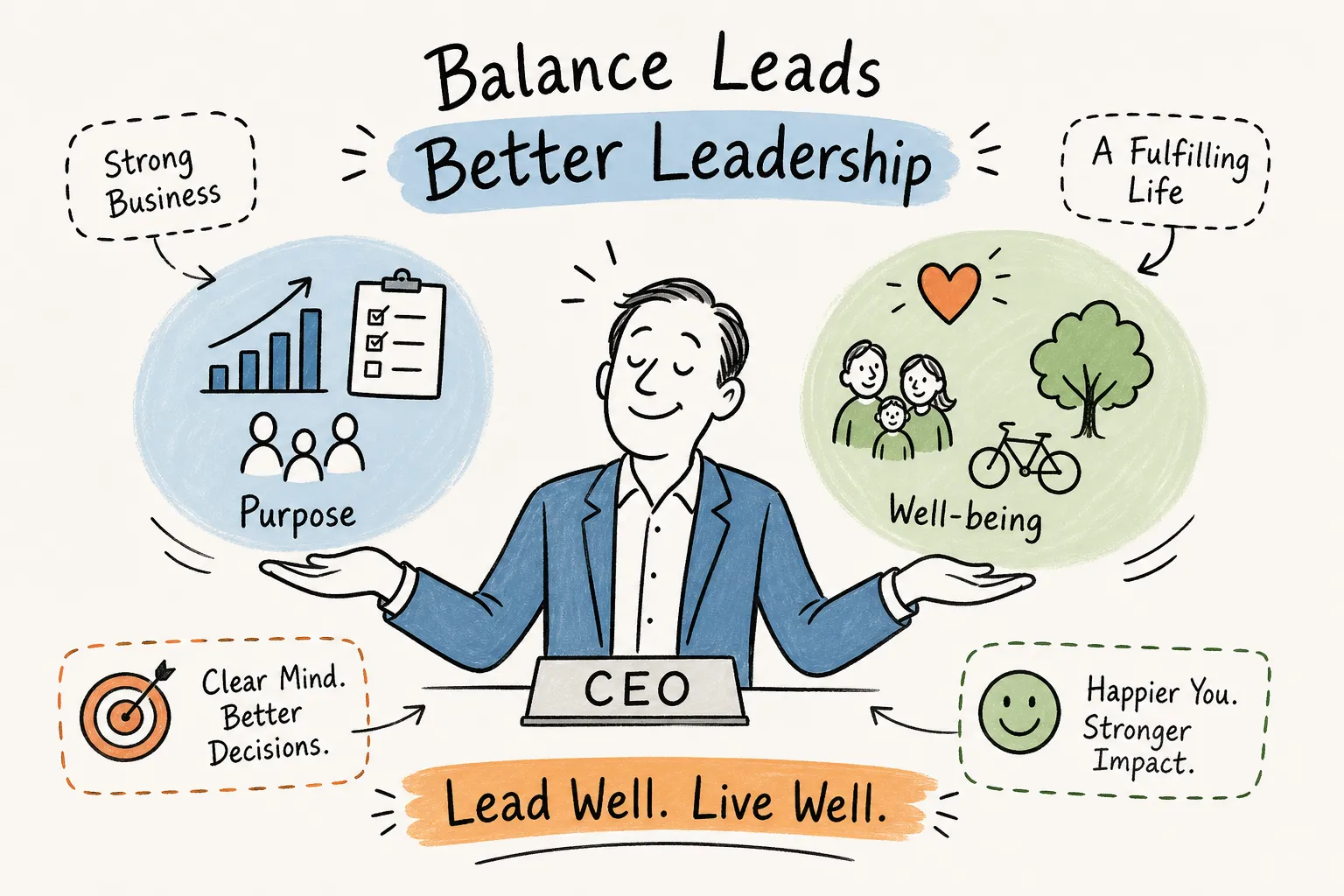
Standard wellness messaging fails in this environment because it frames the issue as a discipline problem. When a CEO hears “take better care of yourself,” the implicit message is that they lack personal willpower or self-awareness. Executives have heard mindfulness pitches and work-life balance advice for years. None of it reframes the problem correctly. A keynote on C-suite work-life integration has to position leadership burnout as a business risk and a leadership design challenge, not a personal failing. That single reframe determines whether the talk earns credibility or loses it in the first five minutes.
C-suite audiences evaluate a speaker’s credentials quickly and without mercy. They want evidence, specificity, and someone who clearly understands their world. They are not in the room to be inspired; they are there to find something operational enough to implement by Monday. A speaker who doesn’t demonstrate that understanding early will spend the rest of the talk addressing people who have mentally moved on to their next meeting.
The opening hook that earns executive trust in 90 seconds
Data alone won’t move a C-suite room. Executives review dashboards all day. A keynote that opens with a real human moment creates the psychological space for them to recognize their own situation and stay open to what comes next. Christopher W. Brown’s opening, which centers on surviving a heart attack after building three companies at a relentless pace, demonstrates what this looks like done well. It signals immediately: this speaker has stood where you are standing, and there is a way forward that doesn’t require dismantling everything you’ve built.
The risk with personal narrative in an executive room is that listeners categorize it as “that won’t happen to me.” The antidote is connecting the story to organizational outcomes within the first two minutes. What happened to the team while he was hospitalized? Which decisions didn’t get made? What did the company nearly lose? When a personal story becomes a business story with operational consequences, the room stays engaged and the defenses drop.
After the hook, the talk needs one clear thesis that everything else proves. One version of this thesis: “The way you’ve built your business is costing you more than you realize, and there is a systems-based way to change it without sacrificing what you’ve built.” That thesis positions the keynote as a leadership design conversation, not a self-care lecture. Everything after it either proves or applies that argument.
The evidence and ROI that make the business case for a CEO work-life balance keynote
The research that resonates with a board-level audience speaks in the language of organizational risk. The numbers from the most current surveys are striking. LHH found that 43% of organizations lost at least half of their leadership team in a single year, with that rate reaching 73% in sales, media, and marketing sectors. Gartner’s October 2024 survey of 200 C-suite executives found that 56% were likely or extremely likely to leave within two years, and 27% within six months. Only 30% of leaders in DDI’s 2025 survey felt they had enough time to perform their responsibilities with the strategic thought their roles required.
These figures don’t land as a wellness concern in a CEO’s mind. They land as a retention crisis, a succession risk, and a competitive threat. Build the board-level wellness ROI argument accordingly. The retention formula works like this: avoided regrettable departures multiplied by replacement cost, recruiting, onboarding, lost productivity, and manager time, minus program cost, divided by program cost. Pair that with the decision quality argument: chronic stress and fatigue measurably impair judgment, emotional regulation, and strategic thinking, the exact functions the C-suite is paid to perform at the highest level.
Give the audience a concrete 30-to-90-day pilot they can take back to their organizations. A decision effectiveness index that tracks cycle time, forecast accuracy, milestone achievement, and reversal rate transforms the keynote from inspiring to operational. Frame the pilot clearly: remove one category of recurring meetings from a comparable team for four weeks, measure the focus hours recovered, and track decision quality. Attach a metric to every recommendation so executives can report back with data rather than feelings. That shift from inspiration to experimentation is what separates a great C-suite keynote from a forgettable one.
Frameworks and CEO case studies for a work-life balance keynote that sticks
The tactical core of any keynote on executive resilience strategies needs to rest on frameworks tested with senior leaders, not invented for the stage. The boundary-support and psychological-detachment model shows that leaders who protect their teams’ non-work boundaries see lower emotional exhaustion and better next-morning recovery across those teams. Structured delegation frameworks that define clear authority, role boundaries, escalation triggers, and outcome reviews are associated with stronger subordinate performance and greater leadership team flexibility. Multi-component resilience approaches that combine workload redesign, peer reflection, and protected recovery time show benefits across well-being, leadership behavior, and organizational outcomes.
Case studies are where credibility compounds. Phil Laskaway at Ernst & Young created an Office for Retention and redesigned workweeks by changing how client relationships and account staffing were structured, not by adding perks, and linked CEO-level sponsorship directly to a retention strategy for high performers. Lawrence Bossidy at AlliedSignal combined demanding performance expectations with treating employees as whole people; employee satisfaction with benefits rose from 50% to 63%, and the company recorded 29 consecutive quarters of more than 13% net-income growth.
Tim Ryan at PwC elevated employee well-being to a CEO-level business priority and measured its effects on team dynamics, client relationships, and retention. None of these are wellness stories. They are leadership design stories, leadership boundaries and delegation transformed into measurable organizational outcomes. That distinction is precisely what keeps a CEO audience engaged through the evidence portion of the talk.
Christopher W. Brown’s Permission to Unplug framework illustrates what actionable looks like at the executive level. Based on his published speaker platform, it gives leaders a self-assessment entry point through a quiz that places them as The Grinder, The Vacationer, The Unplugger, or The Experiencer, then provides a systems-based path forward. For a keynote speaker designing their own CEO time-management framework, this is the model for how to connect an emotional opening story to a structured, repeatable methodology that follows the audience home.
Structuring 30 to 60 minutes that a C-suite room will remember
Timing discipline matters more in an executive keynote than in almost any other context. CEOs calculate opportunity cost in real time. As a practical guideline, a 45-minute talk works well distributed like this: 5 to 7 minutes for the hook and thesis, 10 to 12 minutes for the evidence and ROI case, 15 to 18 minutes for frameworks and case studies, 5 to 7 minutes for the pilot experiment, and 5 to 8 minutes for the call-to-action and close. For 30-minute versions, compress the evidence section and reduce to one case study. For 60-minute versions, add a structured reflection exercise after the frameworks section to give leaders time to apply the model to their own organizations before leaving the room.
Slide design for this audience follows one rule: one idea per slide. C-suite leaders process visuals quickly and distrust slides that over-explain. The CEO dashboard format works well because it mirrors how executives already think, a compact visual showing experimentation rate, cycle time, retention metrics, and decision quality indicators communicates ROI at a glance. Avoid text-heavy builds and bullet lists that the audience reads ahead of the speaker. If a slide can be read without the speaker present, it’s doing too much work.
For interaction formats, structured peer reflection tends to outperform audience participation gimmicks with senior leaders. A well-designed prompt with a specific question creates genuine engagement. For example: “Name one role in your organization that only you can fill right now, and one decision you made last week that someone else could have made.” Keep interactions short, purposeful, and directly connected to the keynote’s central framework. The goal is a moment of self-recognition, not audience management.
The call-to-action that turns one great talk into lasting change
The worst keynote ending for a CEO audience is “go home and find more balance.” The best ending is a single, specific experiment the audience can launch within 72 hours. For example: “This week, identify one recurring meeting that exists because no one has challenged it, cancel it for the next four weeks, and measure what you recover.” Attach a metric, and ask the audience to report back with data rather than impressions. That single shift from aspiration to experiment changes how the talk lands and how long it stays relevant.
The talk shouldn’t end when the applause stops. A downloadable framework, a self-assessment quiz, or a 30-day CEO pilot guide extends the keynote into implementation. Christopher W. Brown’s entrepreneur quiz does exactly this: it gives executives a personalized starting point so the message continues living in their operations rather than disappearing into a conference program binder. The post-talk ecosystem doesn’t need to be complex; it needs to give the audience somewhere to go next, something to measure, and a reason to act before the urgency of the next quarterly cycle replaces the clarity they felt in the room.
If you’re evaluating what a keynote speaker should cover for a CEO audience on work-life balance, the answer comes down to one word: specificity. Hard data, tested frameworks, real case studies, and one measurable first action with a metric attached. The room doesn’t need to feel inspired. CEOs are inspired by results. Design the entire talk so that when they walk out, they have a plan in their hand and a hypothesis worth testing. That is what a great executive work-life balance keynote delivers, and it is the standard every speaker who takes this topic seriously should be building toward.